
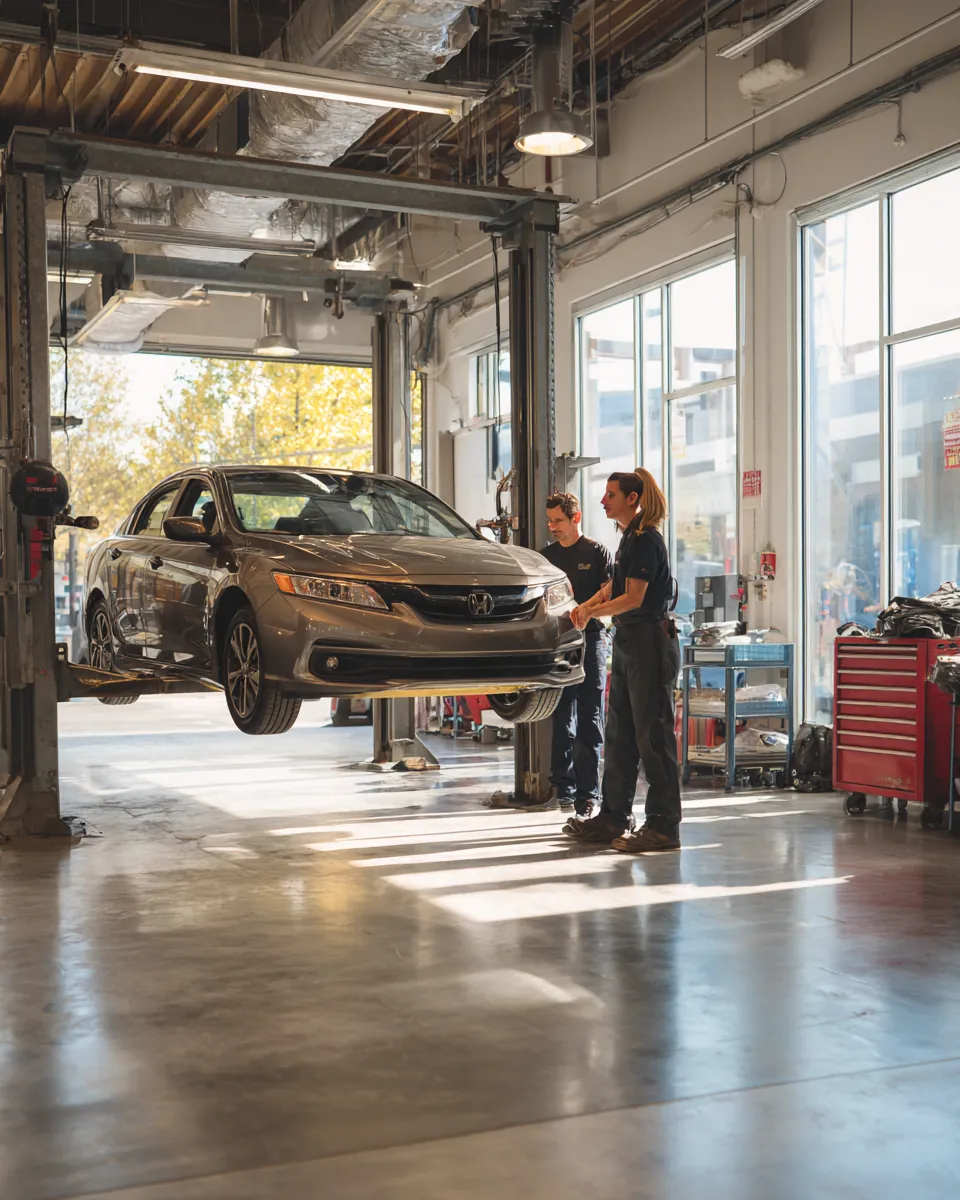
A $1,000 loan is a small fixed-rate installment loan that many borrowers use to cover one urgent bill, most often a car repair, and repay over about 6 to 24 months. At an estimated 24.99% APR, a 12-month term works out to roughly $95 a month, depending on the lender.
Who Typically Takes Out a $1,000 Loan
Most people who borrow $1,000 have steady income but a thin cash cushion, and they face one specific bill that cannot wait for two or three paychecks to cover it.
The typical personal loan borrower at this size is not trying to fix a long-running money problem. More often it is someone whose transmission started slipping on the way to work, whose dentist found a cracked molar, or whose utility account fell two months behind after a slow season of hours. The common thread is timing: the expense is real, the income to cover it exists, but the money arrives later than the bill. A small fixed-rate personal loan spreads that one cost across several months so rent and groceries keep getting paid.
People who search for stax payments at this amount are usually comparing quick, small personal loans against a credit card or a repair-shop financing plan. That comparison is worth doing carefully, because a $1,000 balance is small enough that the APR and the term you choose matter more than the headline amount. A borrower with fair credit and a 12-month term may pay around $140 in interest; stretch the same balance to 36 months at a higher rate and the cost can rise past $600.
Lenders in our network often see a few common profiles at this size: hourly workers who rely on a car to reach a job site, gig drivers whose vehicle is their income, recent graduates with short credit histories, and older borrowers who prefer a fixed payment to revolving card debt. Each profile can qualify, but the offers they see differ based on credit, income and state rules.
Using a $1,000 Loan for Car Repairs
Car repairs are the most common reason people take a personal loan of about $1,000, because many mid-sized repairs such as brakes, alternators, starters or cooling-system work land between $600 and $1,200 with parts and labor.
When a shop hands you an estimate, the first move is to break it into what is urgent and what can wait. A mechanic who quotes $1,050 might list front pads and rotors, a serpentine belt, a cabin air filter and a wiper blade set. The brakes and belt are safety and reliability items; the filter and blades can be done yourself later for a fraction of the price. Trimming the estimate to the essentials can drop the amount you need to borrow, and every dollar you avoid borrowing saves interest.
Ask the shop the right questions
- Is this repair needed now, or can it safely wait a month?
- Are aftermarket parts an option, and what warranty comes with them?
- Will the shop hold the quote for a few days while you line up funding?
- Does the shop offer its own financing, and what is the APR after any promotional period?
Many shops partner with a third-party financing company, and some of those plans carry deferred interest: if any balance remains when the promo ends, interest is charged back to the original purchase date. A fixed-rate personal loan works differently. The rate and payment are set at signing, each personal loan payment reduces principal on a schedule, and there is no surprise charge at month 12. For a borrower who knows they need the full year to pay it off, that predictability can be worth more than a promotional zero.
Timing also matters. If your car is your only way to work, every day it sits on the lift costs you income. Many lenders fund as soon as the next business day after you sign, though bank processing varies and nothing about speed is certain. Starting your request the same day you get the estimate gives you the best chance of picking the car up without missing a shift.

Other Common Uses: Dental Copays, Utilities and a Work Laptop
Beyond car repairs, borrowers often use about $1,000 for a dental crown copay, catching up on an overdue utility balance before a shutoff date, or replacing a laptop that their job or coursework depends on.
Dental crown copay. Even with insurance, a crown often leaves a patient owing several hundred dollars to over a thousand, because many dental plans cover major work at around 50% after the deductible. Ask the office for a written treatment estimate with insurance codes, confirm your plan's annual maximum, and ask whether the office offers a cash-pay discount or an in-house payment plan before you borrow.
Overdue utility catch-up. A disconnect notice is stressful, but utilities frequently offer arrangements, and many states run assistance programs for heating and cooling bills. Call the utility first and ask for a payment plan in writing. If the arrangement still leaves a gap, a small loan can close it, but only after you know the exact amount needed to restore good standing.
A laptop for work. If a remote role, a certification course or freelance clients depend on a working computer, a dead laptop is an income problem. A mid-range machine and a basic warranty can sit close to $1,000. Before borrowing, price refurbished models from the manufacturer, which often carry the same warranty as new units, and check whether your employer reimburses equipment.
In each case the logic is the same: confirm the true amount, look for a lower-cost arrangement from the provider, and borrow only the remaining gap.
Estimated Payments on a $1,000 Loan
Estimated monthly payments on a $1,000 balance range from about $36 on a 36-month term at 17.99% APR to about $185 on a 6-month term at 35.99% APR, depending on the offer you receive.
The table below uses fixed-rate, fully amortizing math with no origination fee assumed. Every figure is an estimate for an unsecured personal loan; the lender sets your actual APR, fees and term after reviewing your application. You can test other combinations with our personal loan payment calculator.
| Term | 17.99% APR | 24.99% APR | 35.99% APR |
|---|---|---|---|
| 6 months | $175.52 | $179.02 | $184.59 |
| 12 months | $91.68 | $95.04 | $100.46 |
| 18 months | $63.80 | $67.19 | $72.70 |
| 24 months | $49.92 | $53.37 | $59.04 |
| 36 months | $36.15 | $39.75 | $45.80 |
Notice how little the payment moves between rates on a short term. On 6 months, the gap between 17.99% and 35.99% APR is only about $9 a month, because the balance is paid down so quickly that interest has little time to build. On 36 months the gap grows to almost $10 a month, but it compounds across three years, which is where the real cost difference lives.
If an offer includes an origination fee, lenders may charge 0%–10% of the amount, and that fee raises the APR. On a 1000 dollar loan, a 5% fee means $50 is either deducted from the funds you receive or added to the balance, so ask which method the lender uses before you accept.
Total Cost of a $1,000 Loan by Term and APR
Borrowing $1,000 at 24.99% APR costs an estimated $140 in interest over 12 months, but the same rate over 36 months costs about $431, so the term you choose can triple the price of the loan.
Multiplying the monthly estimate by the number of months shows what you would repay in total, assuming every payment is on time and there is no fee:
- 12 months at 24.99% APR: about $1,140.47 repaid in total.
- 24 months at 24.99% APR: about $1,281 repaid, roughly $281 in interest.
- 36 months at 24.99% APR: about $1,431 repaid, roughly $431 in interest.
- 12 months at 17.99% APR: about $1,100 repaid, roughly $100 in interest.
- 36 months at 35.99% APR: about $1,649 repaid, roughly $649 in interest.
The practical takeaway for a car repair is to choose the shortest term whose payment you can carry without strain. If $95 a month fits, the 12-month option saves nearly $300 compared with 36 months at the same rate. If only $55 fits, the 24-month term is a reasonable middle ground. Our page on current personal loan rates and APR ranges explains how credit, income and state rules move the rate you are offered.
Tip: ask whether the lender charges a prepayment penalty. Many do not, which means you can take a longer term for a lower required payment and still pay extra whenever a paycheck allows.
Documents and Requirements Lenders Ask For at $1,000
Lenders reviewing a request around $1,000 commonly ask for a government-issued ID, proof of regular income, an active checking account, a Social Security number for the credit check, and contact details they can verify.
Because the amount is small, the paperwork is usually lighter than for larger personal loans, but lenders still need to confirm who you are and that you can repay. Expect some combination of the following:
- A driver's license, state ID or passport.
- Recent pay stubs, a benefits letter, or bank statements showing deposits.
- A checking account in your name for funding and automatic payments.
- Your Social Security number so the lender can pull a credit report.
- A current address, phone number and email.
Most lenders want borrowers to be at least 18 (19 or 21 in a few states) and a US resident. Some accept fair or limited credit at this size; bad credit personal loans exist, but they typically come with APRs near the top of the range. Many lenders start with a soft inquiry to show estimated offers, then run a hard inquiry only if you choose to move forward. Review the full eligibility requirements for a personal loan before you start so you have everything ready.
A stax payments request through our form takes only a few minutes and is free, with no obligation to accept any offer. We are a connection service, not a lender, so the lender who responds makes the credit decision.
$1,000 or $1,500: Choosing the Right Amount
Choose $1,000 when your written estimate is at or below that figure, and consider a slightly larger amount only when a firm quote clearly exceeds it, because borrowing extra adds interest on money you never needed.
A common mistake is rounding up "just in case." Suppose your brake job is quoted at $780. Borrowing $1,000 instead of $800 at 24.99% for 12 months adds about $19 a month and roughly $28 in interest, plus whatever the extra $220 tempts you to spend. If the shop finds another issue mid-repair, you can usually pay a small overrun from your next paycheck rather than carrying it for a year.
On the other hand, if your quote is $1,350 because the repair includes a water pump and timing belt together, squeezing into a smaller loan and putting the rest on a high-APR card may cost more overall. In that case, compare offers on a $1,500 loan for moving or larger repairs, where an estimated 12-month payment at 24.99% APR is about $143.
A useful rule: borrow the amount on the written quote, rounded to the nearest $100, and keep your own savings for the unexpected extras.
Alternatives to a 1000 Dollar Loan
Alternatives worth checking before a personal loan include a repair-shop payment plan, a credit union small-dollar loan, an employer paycheck advance, a 0% intro APR credit card, or asking the provider for a discount in exchange for paying part up front.
Each option has trade-offs. A credit union loan may carry a lower rate but often requires membership and a few days to process. An employer advance costs nothing in interest but reduces your next paycheck by the full amount, which can create a new gap. A 0% intro card works well if you are confident you will clear the balance before the promo ends; if not, the go-to rate can exceed 25%. Family loans avoid interest but can strain relationships, so put the terms in writing.
Comparing personal loans online against these choices is the right instinct. Line up the total cost, not just the monthly payment, and pick the one with the lowest total you can realistically repay. For a car that gets you to work, the cheapest option that funds before you lose shifts usually wins.
One option to avoid is skipping other essential bills to pay the shop. A missed rent or insurance payment can trigger late fees and coverage gaps that cost more than a year of loan interest.
Planning Repayment on a $1,000 Loan
Good repayment planning on a $1,000 loan means fitting the fixed payment into your budget before signing, setting up autopay a few days after your paycheck lands, and adding small extra payments whenever your income allows.
Start with your monthly take-home pay and subtract fixed costs: housing, insurance, phone, minimum card payments and groceries. Whatever remains is your real cushion. A payment of about $95 should take up no more than a modest share of that cushion, so a single slow week does not push you into a late fee.
- Pick a personal loan due date two to four days after your most reliable deposit.
- Enroll in autopay; some lenders may offer a small rate discount for it.
- Round your payment up, for example to $100, so principal falls faster.
- Put any tax refund or bonus toward the balance if there is no prepayment penalty.
- After the loan is paid off, keep sending the same amount into savings so the next repair comes from cash.
That last step is what turns a one-time loan into a stronger financial position. Ten or twelve months of saving a former $95 payment builds a buffer close to the size of the original bill, which is exactly what most people who search for stax payments wish they had when the check-engine light came on.
If your budget changes mid-loan, call the lender before a payment is missed. Many lenders can move a due date or discuss hardship options, and acting early protects your credit report.
Practical Next Steps Before You Request Funds
Before requesting funds, get a written estimate, decide the smallest amount that covers it, pick a target monthly payment, and gather your ID, income proof and bank details so a lender can review your request quickly.
When you compare personal loan offers that come back from a stax payments request, read each offer's APR, total repayment, fee and term side by side. A slightly higher monthly payment on a shorter term often costs less in total, while a longer term gives breathing room if your income varies. Neither is wrong; the right choice is the one you can pay every month without borrowing again.
Keep in mind that we do not set personal loan rates or approve applications. Final APR, fees, amount, term and approval come from the lender. If an offer does not fit your budget, you can decline it, since submitting a request carries no obligation. A focused stax payments search, a firm quote and a realistic budget are usually enough to turn a stressful repair bill into one manageable monthly line item.
Frequently Asked Questions
Can I use a $1,000 loan to pay a repair shop directly?
Most lenders deposit the funds into your checking account rather than paying the shop, so you pay the mechanic yourself by debit card or transfer. Ask the shop to hold your written quote for a few days while funding clears, and keep the final invoice in case you need it for warranty claims later.
What is the estimated monthly payment on $1,000 over 12 months?
At an estimated 24.99% APR with no origination fee, a 12-month term works out to about $95.04 a month, or roughly $1,140 repaid in total. At 17.99% APR the estimate drops to about $91.68. Your actual payment depends on the APR, fees and term the lender offers.
Is a 1000 dollar loan possible with fair or limited credit?
Some network lenders consider borrowers with fair or limited credit at this smaller size, especially when income is steady and verifiable. Expect APRs toward the higher end of the range, and compare total repayment carefully. Approval is decided by the lender, not by our request form.
Should I borrow $1,000 if my repair quote is only $700?
Borrowing more than the quote adds interest on money you do not need. If your estimate is $700, request an amount close to that figure where possible and keep a small cash cushion for overruns. Smaller balances repay faster and usually cost less in total interest.